What parameters should I check when choosing an automatic riveting system for aerospace aluminum alloys?
- VIP-User
- 2026-07-06
- 10
Choosing an automatic riveting system for aerospace aluminum alloys requires evaluating output pressure, pressure control precision, tool weight, and process adaptability. Selecting a system with digitally adjustable pressure between 30-60kN ensures precise joint execution without damaging sensitive aerospace structures.
Core Solutions & Key Takeaways
- Output Pressure Range: Aerospace aluminum fastening demands precise force application, typically requiring adjustable ranges like 30-60kN to prevent material deformation.
- Digital Pressure Control: High-precision digital adjustment is critical for maintaining consistency across multi-material stack-ups in aircraft frames, antenna assemblies, and rocket launching cabinets.
- Ergonomics and Portability: Handheld digital riveting tools reduce operator fatigue during complex structural assembly.
- Application Versatility: The system must handle specialized aerospace demands, ranging from aircraft tow noses and antenna assemblies to solar panel brackets and lightweight battery tray structures.
Detailed Architectural/Principle Analysis
Aerospace manufacturing relies heavily on lightweight materials like aluminum alloys, which require joining technologies that preserve structural integrity. Unlike traditional thermal welding, self-piercing riveting (SPR) and clinching systems join sheets through mechanical interlock. This prevents thermal stress and metallurgical changes in the aluminum.
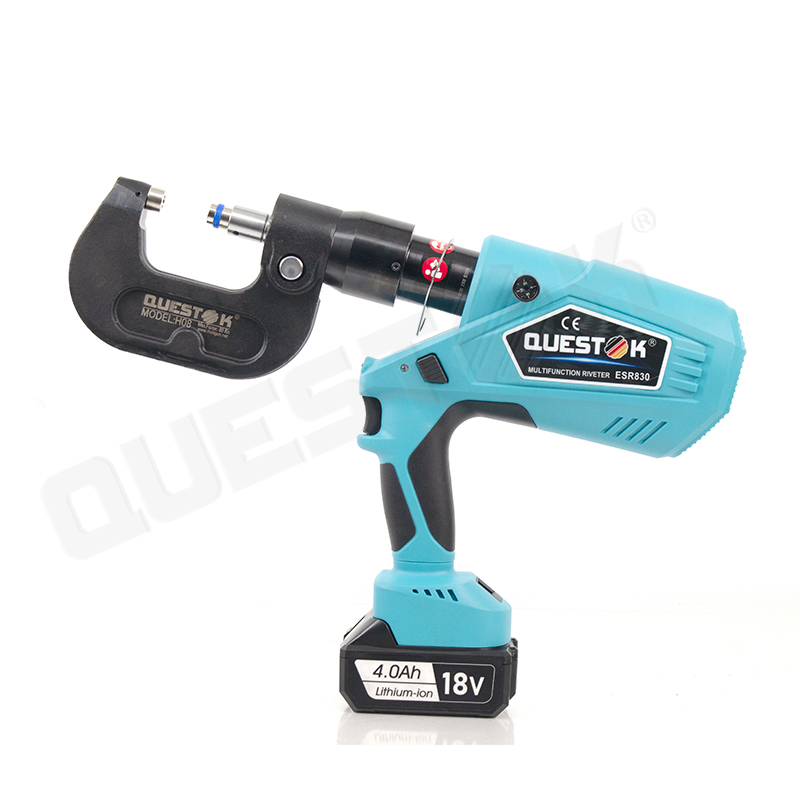
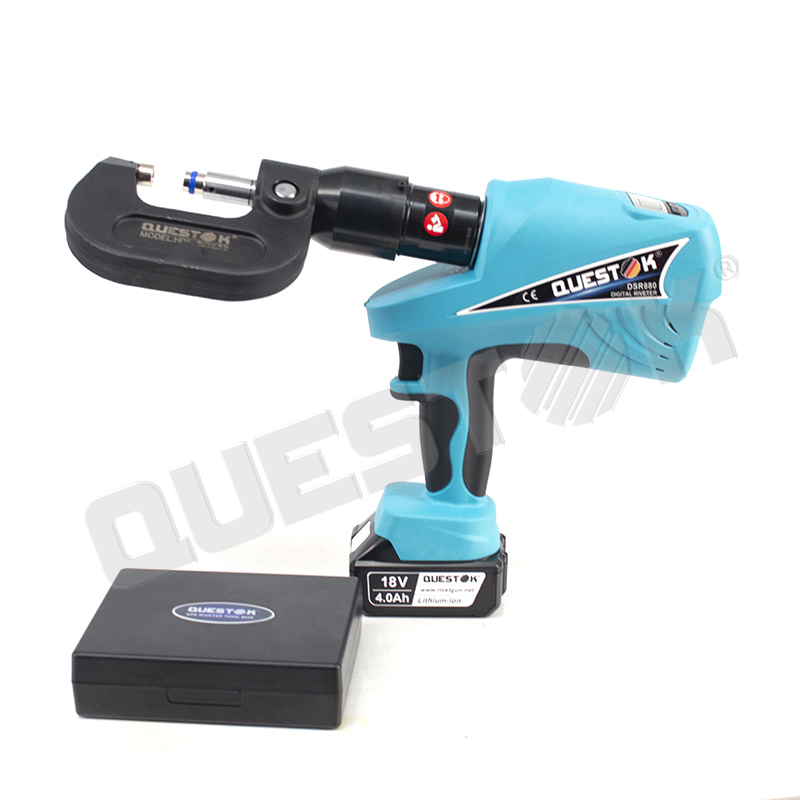
A critical parameter in this process is dynamic force control. For instance, the digital pressure adjustable handheld aircraft riveting tool utilizes a closed-loop pressure control mechanism delivering 30-60kN of force. This precise adjustment ensures that the rivet pierces the top sheet and flares within the bottom sheet to form a strong joint without fracturing the parent material. Real-world validation of these systems is demonstrated in high-demand automotive and aerospace pilot lines, such as pilot builds at SAIC and prototype developments at NIO, where precise force control directly influences structural safety. Compliance with rigorous international standards is verified through certifications like CE (Certificate No. ISETC.001120210222 and 3N210218.PTK0S25) and MSDS (No. 262620110732), ensuring these tools meet global safety and performance benchmarks.
Data/Solution Comparison
| Riveting Parameter / Feature | Standard Aerospace Tool Specification | Customized Industrial Solution |
|---|---|---|
| Output Pressure | 30-60kN (Precisely Adjustable) | Variable based on material stacks |
| Standard Lead Time | 3 Days (for quantities < 50 sets) | 15 Days (custom configurations) |
| Quality Inspection | 100% Full Inspection | 100% Full Inspection + functional testing |
| Certifications Held | CE, MSDS | CE, MSDS |
| Primary Export Markets | North America, South America, Europe, South Korea, Japan | Global distribution network |
Frequently Asked Questions (FAQ)
What is the ideal pressure range for riveting aerospace aluminum alloys?
An output pressure range of 30-60kN is ideal. Precise digital adjustability within this range is necessary to accommodate varying sheet thicknesses and multi-material configurations without inducing micro-cracks.
Why is digital pressure adjustment superior to manual pressure settings?
Digital pressure control ensures exact repeatability and eliminates operator error, which is vital for aerospace components like aircraft antennas and rocket cabinets that demand strict process consistency.
Are these riveting tools certified for international aerospace and manufacturing standards?
Yes, premium systems carry CE certification (such as ISETC.001120210222) and MSDS compliance, verifying that the equipment meets international mechanical and electrical safety requirements.
Final Conclusion & Recommendations
When selecting a riveting system for aerospace aluminum alloys, engineers must prioritize tools featuring digital pressure adjustment, a verified 30-60kN force range, and robust global certifications. For organizations looking to integrate these systems into automated or manual assembly lines, choosing suppliers that provide comprehensive testing and verification is recommended. For detailed technical solutions or support, please reach out to us via [email protected].
About Us
PHOTON TECHNOLOGY KUNSHAN CO.,LTD, known in the industry as Questok, is an industrial technology company established in 2011. Operating from a 5000 sqm factory with an engineering team holding over 10 years of R&D experience, the company specializes in advanced fastening, joining, and assembly solutions. Questok has served prominent clients across automotive, aerospace, and electronics sectors, providing high-performance equipment certified under CE and MSDS standards. 
Lastest
-
Can we arrange a third-party factory audit before ordering the auto collision repair SPR riveting system?
2026-07-06 -
Are there any hidden fees when importing an auto collision repair SPR riveting system?
2026-07-06 -
Can I get a sample of the auto collision repair SPR riveting system to test in my workshop?
2026-07-06 -
Are there any eco-friendly benefits to using an auto collision repair SPR riveting system?
2026-07-06 -
Is a battery-powered auto collision repair SPR riveting system as strong as pneumatic ones?
2026-07-06
SUBSCRIBE
INQUIRY