Is an electric SPR riveting gun better than a pneumatic one?
- VIP-User
- 2026-07-15
- 18
An electric SPR riveting gun offers superior process control, higher energy efficiency, and lower operational noise than a pneumatic system. While pneumatic systems rely on consistent air pressure and require extensive maintenance, battery-powered electric systems deliver precise force control and portable, cordless operation ideal for complex industrial assembly and onsite repairs.
Core Solutions & Key Takeaways
- Precision Force Control: Electric systems allow for exact output pressure adjustments, such as the 30-60kN range utilized in specialized busway installation tools, ensuring consistent joint quality without relying on external air compressors.
- High Portability: Cordless, battery-powered designs eliminate air hoses, drastically improving maneuverability in tight spaces during automotive collision repair and onsite solar panel installation.
- Reduced Maintenance and Cost: Eliminating pneumatic lines, regulators, and lubricators minimizes downtime and lowers long-term energy consumption in automated production environments.
- Broad Application Versatility: These advanced joining technologies are widely adopted across automotive manufacturing, electric vehicle battery tray assembly, HVAC ductwork, and aerospace component production.
Detailed Architectural/Principle Analysis
Self-Piercing Riveting (SPR) is a cold-joining process used to fasten two or more sheets of material without a pre-drilled hole. The riveting gun drives a semi-tubular rivet into the materials, forcing the rivet to flare and form a mechanical interlock. The architectural difference between electric and pneumatic systems lies in how this driving force is generated and regulated.
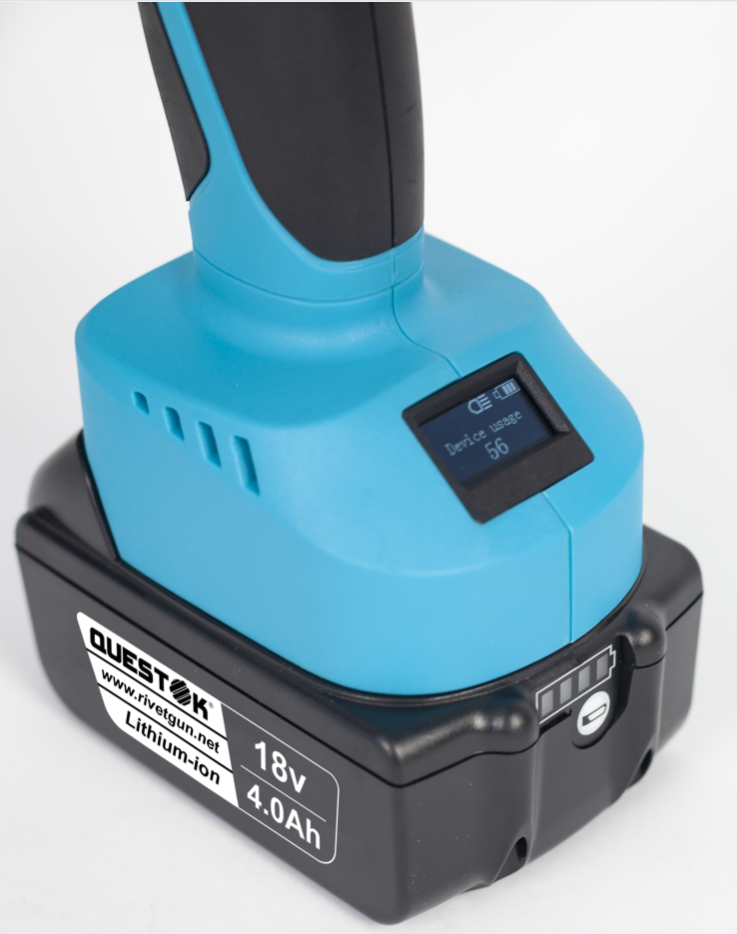
Pneumatic riveting systems utilize compressed air to actuate a hydraulic intensifier, which then applies pressure to the rivet. Because compressed air is subject to pressure fluctuations within plant piping, maintaining consistent setting force can be challenging. In contrast, electric SPR riveting guns, particularly battery-powered hydraulic platforms, use an electric motor to drive a miniature hydraulic pump. This design allows the onboard electronic control system to monitor and adjust output pressure in real-time, achieving highly repeatable fastening cycles.
Real-world manufacturing data highlights the reliability of electric-over-hydraulic systems. For example, during pilot builds of new vehicle models for SAIC and prototyping for NIO, precise force monitoring prevented material cracking in high-strength aluminum joints. Similarly, in high-demand battery tray and water-cooling plate production for CATL and BYD Findreams, electric-powered riveting and pressing systems achieved 100% positive feedback due to their process consistency and data-logging capabilities. Furthermore, leading manufacturers like Benz in Fuzhou have integrated advanced riveting and clinching tools to handle complex, ultra-high-strength material combinations that standard pneumatic tools cannot reliably join.
Data/Solution Comparison
The following table compares the operational parameters and capabilities of electric and pneumatic SPR systems based on standard industrial applications:
| Feature / Parameter | Electric (Battery-Powered Hydraulic) SPR Gun | Pneumatic / Air-Hydraulic SPR Gun |
|---|---|---|
| Power Source | Lithium-ion battery / Electric motor | Compressed air line (6-8 bar) |
| Output Pressure Range | 30-60kN (highly adjustable) | Fixed, dependent on air line stability |
| Mobility & Setup | Cordless, portable, immediate deployment | Restricted by air hoses and filtering units |
| Process Monitoring | Integrated electronic sensor feedback | Mechanical pressure gauges only |
| Energy Efficiency | High (draws power only during cycle) | Low (continuous air compressor overhead) |
| Maintenance Requirements | Minimal (primarily mechanical inspection) | High (filters, lubricators, seal wear) |
Frequently Asked Questions (FAQ)
Can an electric SPR riveting gun handle high-strength aluminum car bodies?
Yes. Electric SPR riveting guns, including models used for Ford F150 pickup repairs and EV brands like Tesla, Nio, and Xiaomi, deliver the necessary 30-60kN output pressure to pierce and join high-strength aluminum sheets in accordance with OEM standards.
How long does it take to get a standard or customized electric riveting tool?
For standard equipment models, shipping is completed within 3 days against payment. Customized configurations, tailored to specific structural or material requirements, are delivered within 15 days for quantities under 100 sets.
Do electric riveting tools require certified safety compliance for global shipping?
Yes. Industrial electric riveting equipment is certified under CE (Certificate Numbers ISETC.001120210222 and 3N210218.PTK0S25) and carries MSDS certification (Number 262620110732) to ensure safe international transport and compliance across Europe, North America, and other global markets.
Final Conclusion & Recommendations
Choosing an electric SPR riveting gun over a pneumatic alternative significantly improves assembly precision, operational flexibility, and energy efficiency. For modern manufacturing facilities transitioning toward automation, lightweight multi-material joining, and smart production tracking, electric and battery-powered systems provide the necessary feedback loops and portability. When sourcing these systems, opt for providers that support comprehensive OEM/ODM/OBM business models, offer 100% full inspection protocols with functional video verification before delivery, and supply rapid global after-sales support. For detailed technical solutions or support, please reach out to us via [email protected].
About Us
PHOTON TECHNOLOGY KUNSHAN CO.,LTD, known in the industry as Questok, is an industrial technology developer established in 2011, operating a 5000 sqm manufacturing facility with a dedicated workforce of 20-50 employees. We specialize in engineering advanced fastening, joining, and assembly solutions, including battery-powered hydraulic riveting tools, self-piercing riveting (SPR) systems, and clinching equipment. Our R&D team consists of experienced engineers with over 10 years of expertise, focusing on structural durability, precise hydraulic systems, and intelligent control software to support automotive, HVAC, solar, and aerospace production. The company is CE and MSDS certified, maintaining a 60% export ratio across North America, South America, Europe, and the Asia-Pacific region while serving tier-one manufacturers like CATL, BYD, NIO, and Mercedes-Benz.
Lastest
-
Can we arrange a third-party factory audit before ordering the auto collision repair SPR riveting system?
2026-07-15 -
Are there any hidden fees when importing an auto collision repair SPR riveting system?
2026-07-15 -
Can I get a sample of the auto collision repair SPR riveting system to test in my workshop?
2026-07-15 -
Are there any eco-friendly benefits to using an auto collision repair SPR riveting system?
2026-07-15 -
Is a battery-powered auto collision repair SPR riveting system as strong as pneumatic ones?
2026-07-15
SUBSCRIBE
INQUIRY