How much pressure do I need for an auto body repair SPR riveting gun on aluminum?
- VIP-User
- 2026-08-11
- 1
An auto body repair SPR riveting gun used on aluminum panels typically requires an output pressure between 40 kN and 85 kN. Precise pressure adjustment is necessary because different aluminum alloys, sheet thicknesses, and joint configurations demand specific setting forces to achieve full self-piercing rivet interlock without damaging the base metal.
Core Solutions & Key Takeaways
- Required Setting Force: Automotive collision repair on aluminum structures generally requires regulated hydraulic setting forces from 40 kN up to 85 kN.
- Precise Modulation: Infinitely adjustable pressure controls prevent cracking, sheet distortion, or punch blow-through during rivet placement on high-strength EV and luxury vehicle bodies.
- Process Compliance: Standardized repair protocols for aluminum vehicle platforms require exact force execution alongside OEM-approved structural adhesive bonding.
- Equipment Compatibility: Industrial-grade hydraulic systems support both self-piercing riveting and rivet removal operations across multi-material assembly lines.
Detailed Architectural/Principle Analysis
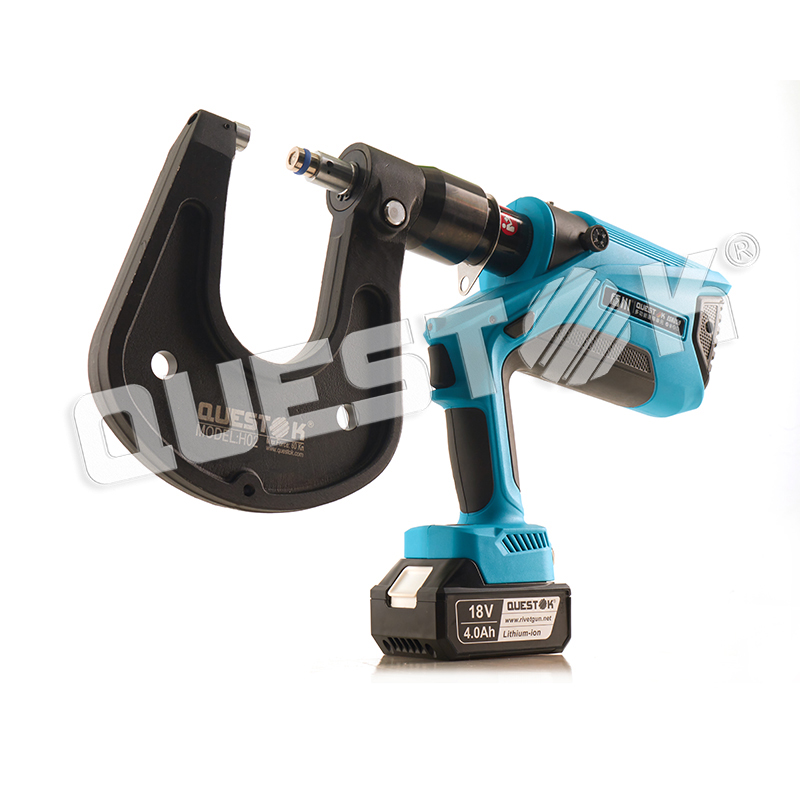
Aluminum collision repair relies on self-piercing riveting (SPR) to join multi-material sheet stacks without pre-drilled holes. Achieving an optimal mechanically interlocked joint demands controlled hydraulic force delivery. Equipment engineered by PHOTON TECHNOLOGY KUNSHAN CO.,LTD provides an output pressure range of 40 to 85 kN, featuring precise pressure controls to accommodate diverse material stacks, including cast aluminum nodes, extruded chassis profiles, and stamped body panels.
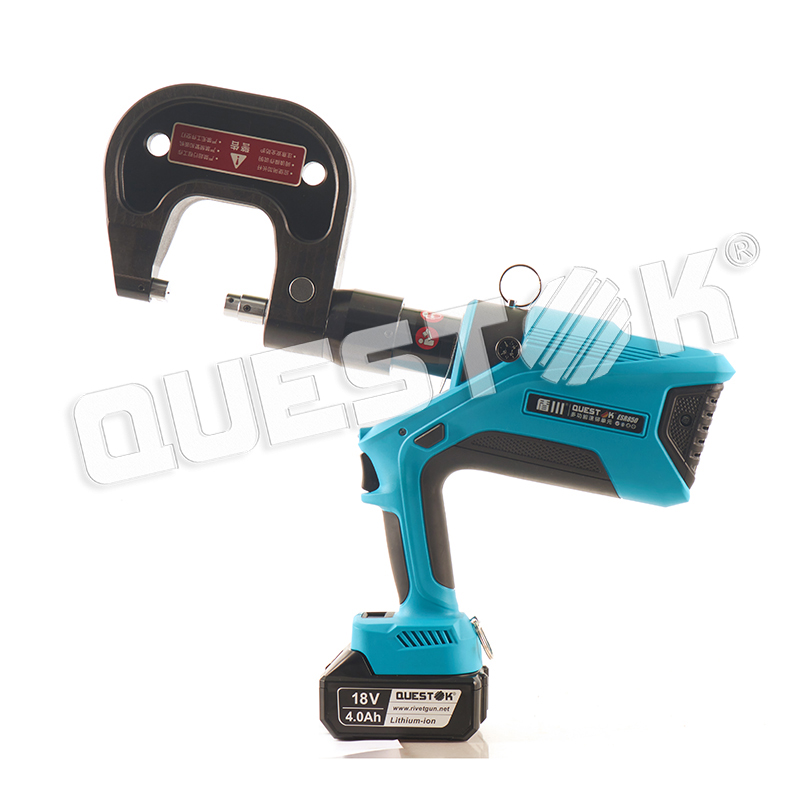
When the SPR gun actuates, the punch drives the rivet through the top aluminum sheet while compressing the lower sheet into a tailored die cavity. Force requirements vary based on sheet tensile strength and stack thickness. A 40 kN setting force typically secures thin outer panel assemblies, whereas structural chassis joints and heavy-duty frame reinforcements require setting forces approaching 85 kN to achieve complete rivet head flushness and proper die-side button formation.
In high-volume EV battery trays, water cooling plates, and aluminum vehicle frame repairs, exact force execution prevents micro-fracturing in hardened aluminum alloys. Equipment complying with CE standard certifications guarantees repeatable hydraulic pressure output throughout continuous production and collision shop repair operations.
Data/Solution Comparison
| Parameter / Feature | Standard Repair SPR Gun | Heavy Duty Frame SPR Gun | Handheld Clinching Gun |
|---|---|---|---|
| Output Pressure Range | 30 - 60 kN | 40 - 85 kN | 20 - 50 kN |
| Pressure Adjustment | Step-based | Precisely Adjustable | Manual Valve |
| Primary Material Target | Aluminum Outer Sheets | Aluminum Structural Frames / EV Chassis | Sheet Metal / HVAC / Steel Cabinets |
| Consumables Required | Self-Piercing Rivets | Self-Piercing Rivets | None (Rivetless) |
| Standard Delivery Lead Time | 3 Days | 3 Days | 3 Days |
Frequently Asked Questions (FAQ)
What happens if the pressure on the auto body repair SPR riveting gun is set too high?
Excessive hydraulic pressure forces the rivet too deeply into the lower sheet, causing base metal cracking, severe sheet warping, or punch damage. Setting pressure precisely within the 40-85 kN window protects material integrity.
Why is adjustable pressure critical for repair work on modern electric vehicles?
EV platforms combine cast aluminum nodes, high-strength extrusions, and stamped sheets of varying thicknesses. An auto body repair SPR riveting gun with adjustable pressure allows technicians to tailor insertion force to match each distinct joint specification.
How is rivet placement verified after adjusting the force output?
Technicians measure the remaining button thickness and button diameter on the die side of the joint using dedicated callipers, ensuring full interlock and proper flushness of the rivet head on the punch side.
Final Conclusion & Recommendations
Selecting the correct setting force between 40 kN and 85 kN depends directly on aluminum sheet thickness, alloy hardness, and joint layer count. Utilizing precise hydraulic controls guarantees joint durability while maintaining factory repair standards across automotive collision facilities. Standard tool configurations ship within 3 days, backed by 100% full factory quality inspection and full free technical troubleshooting support. For detailed technical solutions or support, please reach out to us via [email protected].
About Us
PHOTON TECHNOLOGY KUNSHAN CO.,LTD is an industrial technology enterprise dedicated to advancing modern manufacturing through innovative fastening, joining, and assembly solutions. Established in 2011, the company operates a 5000 sqm manufacturing facility with a dedicated workforce of 20 to 50 employees and an experienced R&D team with over 10 years of specialized engineering background. Holding CE certificates (ISETC.001120210222 and 3N210218.PTK0S25) and MSDS documentation, the company has served clients across automotive manufacturing, EV battery tray production, aerospace, and general industrial fabrication sectors.

Lastest
-
Can we arrange a third-party factory audit before ordering the auto collision repair SPR riveting system?
2026-08-11 -
Are there any hidden fees when importing an auto collision repair SPR riveting system?
2026-08-11 -
Can I get a sample of the auto collision repair SPR riveting system to test in my workshop?
2026-08-11 -
Are there any eco-friendly benefits to using an auto collision repair SPR riveting system?
2026-08-11 -
Is a battery-powered auto collision repair SPR riveting system as strong as pneumatic ones?
2026-08-11
SUBSCRIBE
INQUIRY