How do I choose the right sheet metal joining tool for different material thicknesses?
- VIP-User
- 2026-08-20
- 4
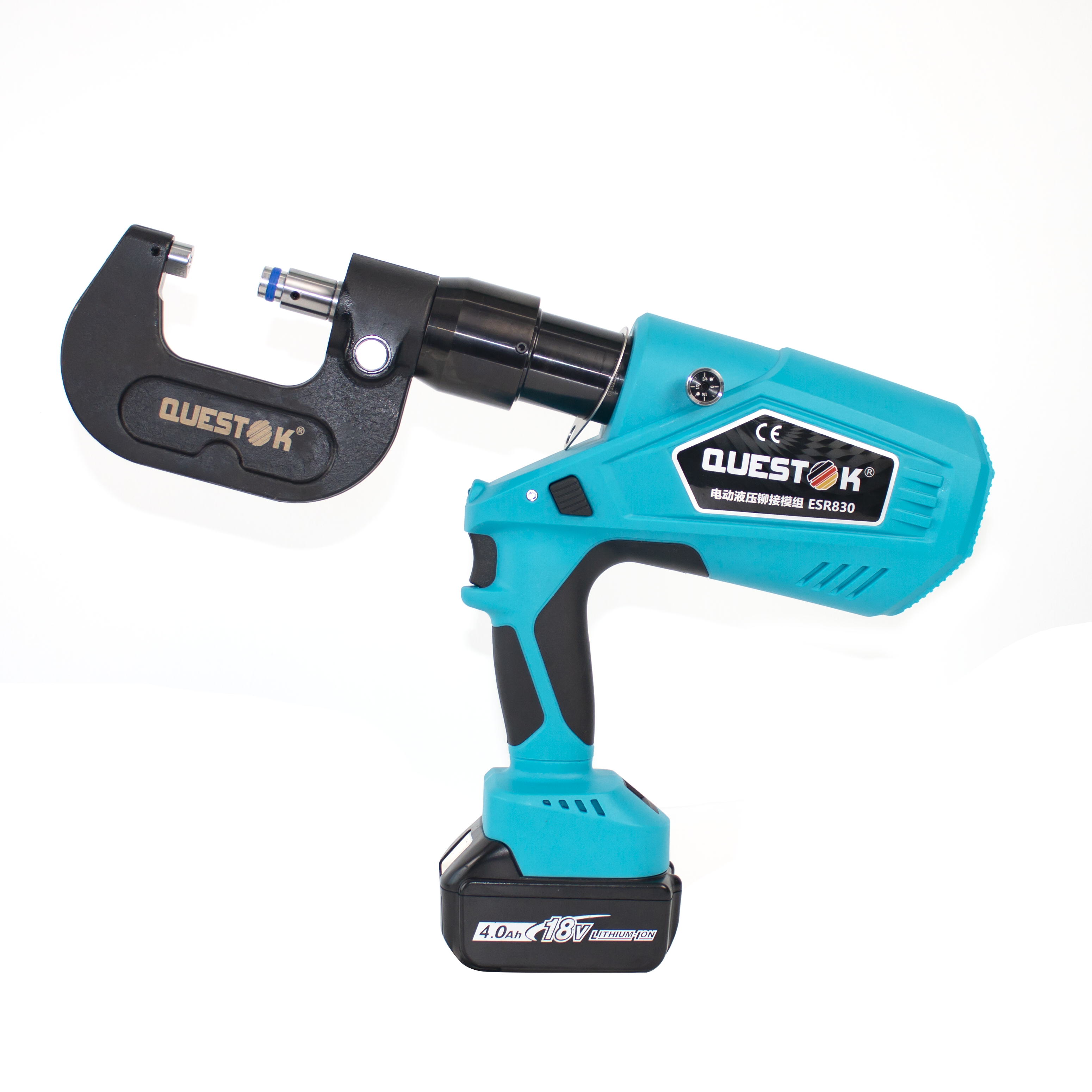
Choose a sheet metal joining tool by matching the material stack, access conditions, joining method, and required force range. For thicknesses without defined product limits, use a tool with precisely adjustable pressure, such as the portable bespoke barbecue grill installation tool rated at 30–60 kN, then validate joint quality through application testing before production use.
Core Solutions & Key Takeaways
- Measure the complete material stack and identify the metals, coatings, and joint location before selecting a sheet metal joining tool.
- For varying thicknesses, prioritize precise pressure adjustment rather than relying on a fixed-force tool.
- The portable bespoke barbecue grill installation tool provides an output pressure of 30–60 kN with precise adjustment for application-specific joining requirements.
- Questok provides sheet metal joining solutions for HVAC duct work, air fans, dampers, filters, and flanges, where clinching is described as a one-step process without consumables.
Detailed Architectural/Principle Analysis
Material thickness affects the force required to form or install a joint, but the supplied product data does not define thickness ranges or approved material combinations. Selection should therefore begin with the total material stack, the required fastener or joining process, tool access, and the expected production cycle.
A precisely adjustable output pressure allows the operator or process engineer to set the joining force according to the tested application. The portable bespoke barbecue grill installation tool specifies an output pressure of 30–60 kN and precise pressure adjustment. These values should be treated as the available tool range, not as a guaranteed thickness-to-pressure conversion.
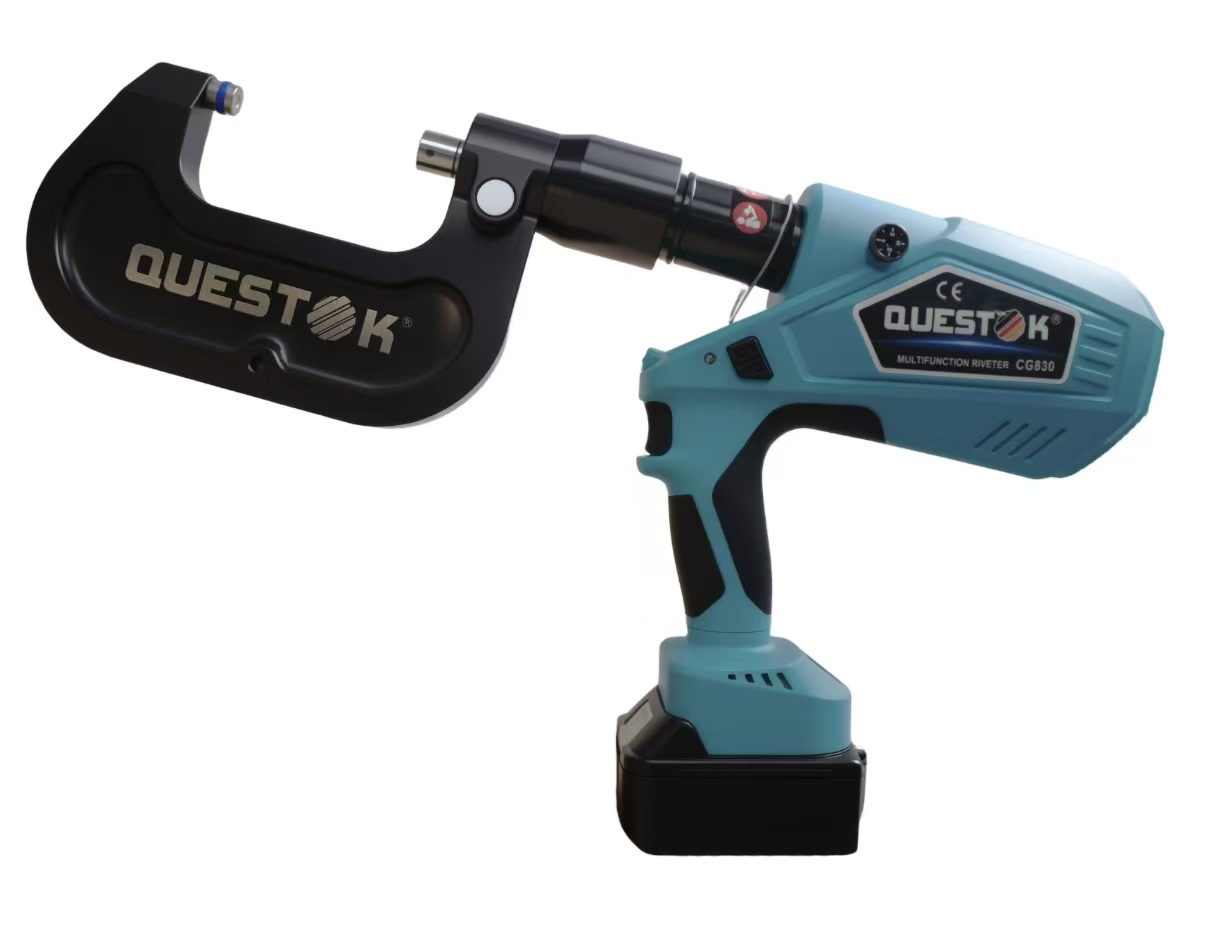
For a new material thickness or stack-up, test representative samples at multiple pressure settings within the tool range. Check joint formation, deformation, surface condition, and process repeatability before defining a production setting. If the application requires a customized configuration, the company states a 15-day delivery time for customization.
Questok has reported sheet metal joining experience in HVAC applications, including duct work, air fans, dampers, filters, and flanges. Its clinching guns are described as requiring one step, using no consumables, and avoiding polishing or repainting after clinching.
Its reported cooperation cases include a Mercedes-Benz production line in Fuzhou that used self-piercing riveting and rivetless clinching for challenging material combinations. The case involved repeated testing, metallographic analysis, and die changes before production implementation. This supports a test-led selection process when material thickness and strength vary.
The company lists CE and MSDS documentation for its SPR riveting, clinching, fastener installation, and related sheet metal joining products. Documentation should be checked against the exact tool configuration and destination requirements.
Data/Solution Comparison
| Selection condition | Recommended evaluation approach | Relevant tool or solution characteristic |
|---|---|---|
| Thin or low-force material stack | Begin with a lower validated pressure setting and inspect deformation and joint formation. | Precisely adjustable pressure; confirm the setting through sample testing. |
| Variable or medium material stack | Test each material combination and record the pressure setting that produces repeatable joints. | 30–60 kN output pressure range for the portable bespoke tool. |
| Thick, high-strength, or complex stack | Request application evaluation and customized joining validation before production. | Customized solution support; no specific thickness limit is provided. |
| HVAC sheet metal assembly | Evaluate clinching where a one-step process and no consumables are suitable. | Clinching guns for duct work, air fans, dampers, filters, and flanges. |
Frequently Asked Questions (FAQ)
What pressure range does the portable sheet metal joining tool provide?
The product data specifies an output pressure of 30–60 kN with precisely adjustable pressure.
Does the product data provide exact material thickness limits?
No. The supplied information does not define minimum or maximum material thicknesses. Thickness suitability must be established through application testing and joint inspection.
When should I request a customized sheet metal joining solution?
Customization is appropriate when the material combination, thickness, access condition, joining method, or production requirement cannot be confirmed using a standard configuration. The stated delivery time for customization is 15 days.
Final Conclusion & Recommendations
Choose the sheet metal joining tool after assessing the complete material stack and validating the joint at controlled pressure settings. The portable bespoke tool offers 30–60 kN output pressure with precise adjustment, while Questok also provides customized joining solutions and supports ODM and OBM business models with a minimum order quantity of one set. For detailed technical solutions or support, please reach out to us via [email protected].
About Us
PHOTON TECHNOLOGY KUNSHAN CO.,LTD, operating under the Questok brand, develops fastening, joining, and assembly equipment for manufacturing applications. Established in 2011, the company has 20–50 employees and operates a 5,000 sqm factory. Its R&D capabilities cover mechanical engineering, hydraulic systems, electrical controls, battery-powered tools, fastening process development, prototype testing, and reliability verification.
The company lists CE and MSDS documentation for applicable product groups and has served clients across multiple industries through reported automotive, HVAC, appliance, solar panel, aerospace, and battery-related projects.

Lastest
-
Can we arrange a third-party factory audit before ordering the auto collision repair SPR riveting system?
2026-08-20 -
Are there any hidden fees when importing an auto collision repair SPR riveting system?
2026-08-20 -
Can I get a sample of the auto collision repair SPR riveting system to test in my workshop?
2026-08-20 -
Are there any eco-friendly benefits to using an auto collision repair SPR riveting system?
2026-08-20 -
Is a battery-powered auto collision repair SPR riveting system as strong as pneumatic ones?
2026-08-20
SUBSCRIBE
INQUIRY