How do I choose the right sheet metal clinching tool for 2mm steel?
- VIP-User
- 2026-08-12
- 5
Choosing the right sheet metal clinching tool for 2mm steel requires evaluating necessary force capacity, joint geometry, and tool portability. Equipment providing a precisely adjustable output pressure between 30 kN and 60 kN delivers sufficient force to create a high-strength mechanical interlock without thermal distortion, pre-drilling, or consuming additional fasteners.
Core Solutions & Key Takeaways
- Adjustable Force Range: A tool with 30–60 kN precisely adjustable output pressure allows exact matching to specific sheet metal thicknesses and material hardness levels.
- Consumable-Free Operation: Cold-forming joining creates strong interlocked joints without rivets, screws, or welding wire, reducing long-term material expenses.
- Surface Integrity: Clinching preserves galvanized, painted, or coated steel surfaces, eliminating post-joining grinding or repainting steps.
- Broad Application Range: Applied extensively across HVAC ductwork, solar panel bracket assembly, white goods framing, and automotive structural components.
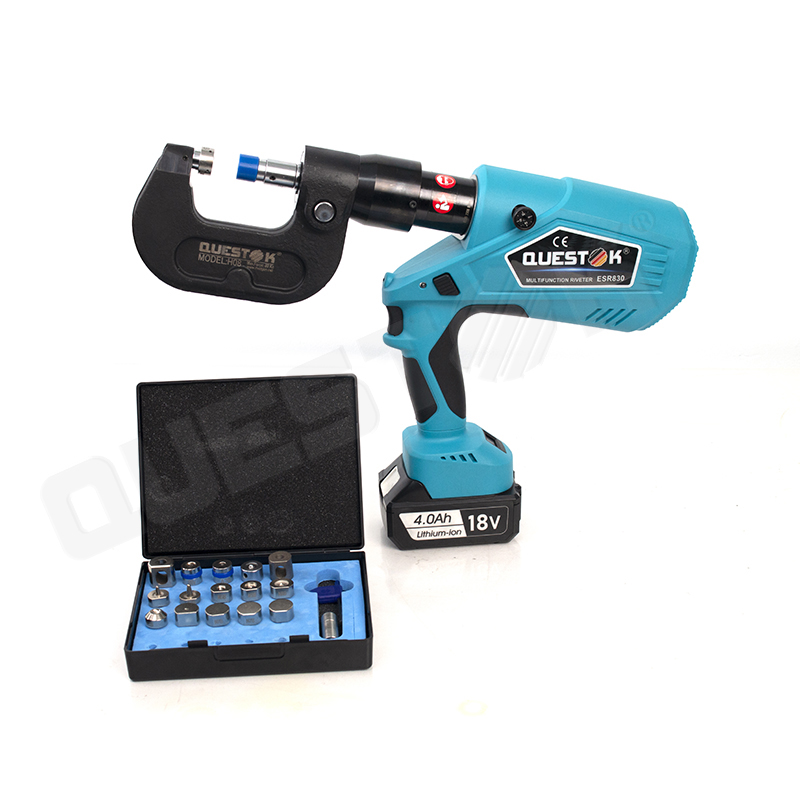
Detailed Architectural & Principle Analysis
Sheet metal clinching is a cold-forming joining technique that draws and squeezes stacked metal sheets into a localized mechanical interlock. When working with 2mm steel sheet combinations, achieving dynamic joint strength requires precise tonnage control. Insufficient force yields incomplete button formation, while excess force can rupture the material or strain tooling dies.
Tools designed with a 30–60 kN hydraulic or hydro-pneumatic output pressure enable operators to fine-tune stroke power to match the yield strength of mild steel or high-strength structural alloys. This variable control prevents surface cracking on galvanized or painted sheets. Because the operation relies solely on plastic deformation of the base metal, it avoids thermal stress and toxic fumes associated with spot welding.
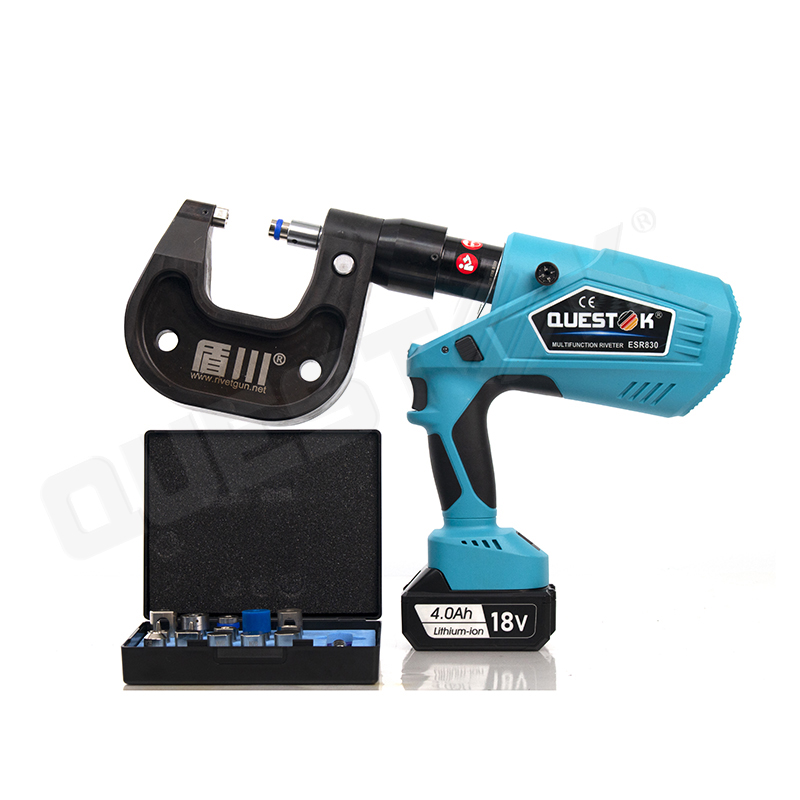
Equipment certified under CE standards (including certifications such as ISETC.001120210222 and 3N210218.PTK0S25) undergoes strict structural and hydraulic verification. In industrial settings such as control cabinet production for Midea and vehicle frame builds for automotive manufacturers like Mercedes Benz, precision clinching tools deliver repeatable joint consistency over high duty cycles.
Data & Solution Comparison
| Technical Specification / Parameter | Standard Portable Clinching Tool | Customized Assembly Solution |
|---|---|---|
| Output Pressure Range | 30–60 kN (Precisely Adjustable) | Customized to Application Tonnage |
| Minimum Order Quantity (MOQ) | 1 set | 1 set |
| Standard Lead Time | 3 days (for orders under 50 sets) | 15 days |
| Quality Inspection Standard | 100% full inspection and functional testing | 100% full inspection and functional testing |
| Consumables Required | None | None |
| Post-Process Requirements | None (No grinding or painting needed) | None |
Frequently Asked Questions (FAQ)
Q: Why is precise pressure adjustment important when clinching 2mm steel?
A: 2mm steel requires sufficient tonnage to exceed its yield point and flow into the die anvil. Adjustable pressure between 30 kN and 60 kN ensures the neck and button form fully without shear failure or premature die wear.
Q: Can clinching tools join coated or painted steel sheets?
A: Yes. Clinching deforms the material locally without burning or scratching protective layers. The surface coating remains intact, maintaining corrosion resistance without requiring touch-up painting.
Q: What are the typical lead times and minimum order parameters for industrial clinching equipment?
A: Standard models carry a minimum order quantity of 1 set and deliver within 3 days for quantities under 50 sets. Customized tool designs ship within 15 days following functional validation.
Final Conclusion & Recommendations
Selecting the optimal sheet metal clinching tool for 2mm steel relies on securing adjustable output force up to 60 kN, verified quality standards, and dependable operational repeatability. Integrating cold-forming clinching equipment replaces costly thermal or fast-fastener processes, streamlining production across sheet metal, HVAC, and structural fabrication workflows. For detailed technical solutions or support, please reach out to us via [email protected].
About Us
PHOTON TECHNOLOGY KUNSHAN CO.,LTD (brand Questok) is an industrial technology company established in 2011, operating a 5000 sqm factory facility with an engineering workforce of 20–50 employees. The company specializes in high-performance fastening, joining, and assembly equipment, including SPR riveting systems, self-piercing riveting guns, and sheet metal clinching tools. Holding CE and MSDS quality certifications, Questok conducts 100% full inspection on all finished tools and serves industrial clients in over 10 global regional markets across automotive manufacturing, aerospace, solar panel installation, and HVAC sectors.

Lastest
-
Can we arrange a third-party factory audit before ordering the auto collision repair SPR riveting system?
2026-08-12 -
Are there any hidden fees when importing an auto collision repair SPR riveting system?
2026-08-12 -
Can I get a sample of the auto collision repair SPR riveting system to test in my workshop?
2026-08-12 -
Are there any eco-friendly benefits to using an auto collision repair SPR riveting system?
2026-08-12 -
Is a battery-powered auto collision repair SPR riveting system as strong as pneumatic ones?
2026-08-12
SUBSCRIBE
INQUIRY