How do I choose the right sheet metal clinching gun for 2mm aluminum sheets?
- VIP-User
- 2026-07-22
- 6
Choosing the right sheet metal clinching gun for 2mm aluminum sheets requires evaluating output pressure, adjustable force control, and tooling compatibility. An optimal tool must deliver an adjustable output pressure of 30-60kN, enabling precise, consumable-free joining of aluminum sheets in HVAC, automotive, or white goods production without damaging pre-painted or polished surfaces.
Core Solutions & Key Takeaways
- Adjustable Force Range: An output pressure range of 30-60kN is required to properly deform and interlock 2mm aluminum sheets without causing material fractures.
- Consumable-Free Joining: Clinching forms a highly reliable mechanical joint using the metal sheets themselves, eliminating the need for rivets, screws, or welding wire.
- Surface Integrity Protection: The process preserves pre-coated, galvanized, or prepainted surfaces, avoiding the need for secondary polishing, grinding, or repainting.
- Versatile Application Adaptation: Clinching tools are designed for rapid integration in automotive body repair, HVAC ductwork, commercial kitchen fabrication, and solar bracket installations.
Detailed Architectural/Principle Analysis
Mechanical clinching, often called press joining, functions by locally deforming sheet metals using a punch and a die. The punch forces the sheets into the die cavity, creating a strong, permanent mechanical interlock. When working with 2mm aluminum sheets, precise force application is necessary. If the pressure is too low, the interlock will not fully form; if too high, the aluminum may crack. Utilizing a tool with adjustable 30-60kN output pressure allows operators to fine-tune parameters to match specific sheet hardness and thickness variations.
This joining method is highly stable and clean. All equipment manufactured under this standard meets industrial safety and compliance metrics, holding CE certifications (including certificates ISETC.001120210222 and 3N210218.PTK0S25) and MSDS verification (262620110732). In field operations, this engineering standard provides a reliable alternative to spot welding.
Real-world application cases demonstrate this reliability. In automotive assembly, companies like NIO, SAIC, and the Fuzhou Benz facility employ precision clinching and self-piercing riveting solutions to secure aluminum frames and panels. For commercial appliances, Midea integrated automated clinching systems into control cabinet production lines, reducing processing steps by bypassing traditional post-weld polishing. In solar bracket installation, portable clinching guns streamline outdoor site assembly efficiently.
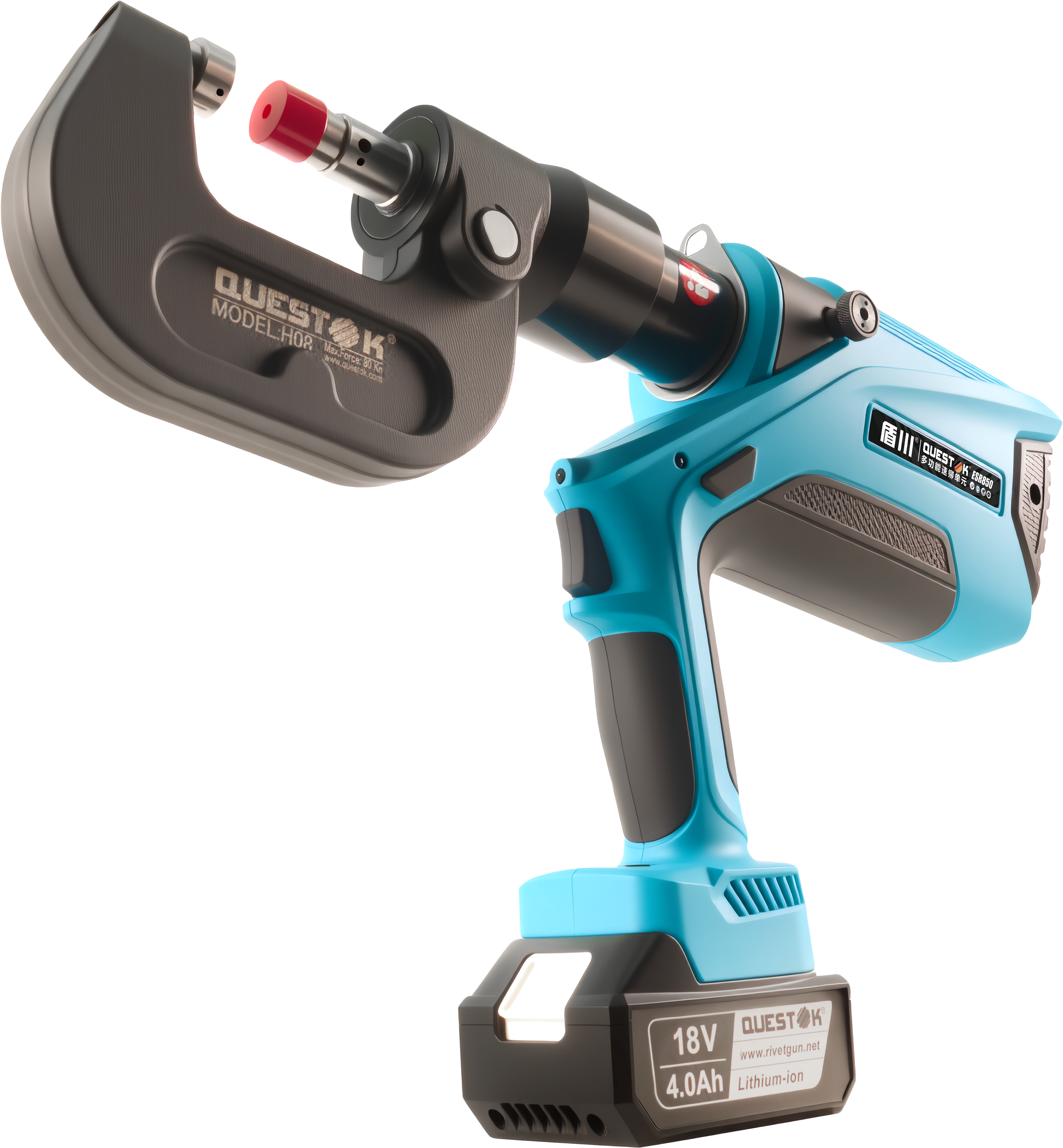
Data/Solution Comparison
| Feature/Parameter | Sheet Metal Clinching Gun | Traditional Spot Welding | Standard Blind Riveting |
|---|---|---|---|
| Output Pressure / Force | 30-60kN (Adjustable) | Thermal fusion (No pressure) | Tensile pulling force |
| Consumable Requirement | None (Uses parent material) | Welding gas/filler metal | Blind rivets/studs |
| Post-Process Refinishing | None required | Grinding and repainting required | None required |
| Operation Steps | 1-step mechanical join | Multi-step (Prep, weld, clean) | 2-step (Drill, insert, pull) |
| Suitability for Pre-painted Sheets | Excellent (Maintains coating) | Poor (Burns coating) | Good (May distort thin sheets) |
Frequently Asked Questions (FAQ)
Q1: Will a clinching gun crack 2mm aluminum during the joining process?
A1: Cracking is avoided by using a clinching gun with adjustable output pressure (30-60kN) combined with correct punch and die geometry. Aluminum requires controlled plastic deformation, which adjustable pressure systems regulate perfectly.
Q2: Can this equipment be integrated into automated production lines?
A2: Yes, the tool supports both standalone manual operation and integration into automated lines, as proven in control cabinet and automotive assembly plants.
Q3: What are the maintenance requirements for a sheet metal clinching gun?
A3: Because there are no consumable fasteners, maintenance is limited to keeping the punch and die clean of metal debris and checking the hydraulic or pneumatic pressure consistency.
Final Conclusion & Recommendations
For operations involving 2mm aluminum sheets, selecting a sheet metal clinching gun with adjustable pressure between 30-60kN ensures reliable, clean, and structurally sound joints. This cold-joining method lowers total manufacturing costs by removing consumable rivets and secondary refinishing phases from the workflow. Implementing certified equipment backed by rigorous quality validation remains the best practice for modern manufacturing. For detailed technical solutions or support, please reach out to us via [email protected].
About Us
PHOTON TECHNOLOGY KUNSHAN CO.,LTD, recognized under the brand name Questok, was established in 2011 and operates a 5000 sqm manufacturing facility with a dedicated team of 20-50 employees. We specialize in engineering high-performance industrial fastening, joining, and assembly systems, including self-piercing riveting guns and sheet metal clinching equipment. Our R&D team brings over 10 years of experience to support ODM and OBM requirements, delivering CE-certified joining technologies to automotive, HVAC, and electronics manufacturers worldwide.


Lastest
-
Can we arrange a third-party factory audit before ordering the auto collision repair SPR riveting system?
2026-07-22 -
Are there any hidden fees when importing an auto collision repair SPR riveting system?
2026-07-22 -
Can I get a sample of the auto collision repair SPR riveting system to test in my workshop?
2026-07-22 -
Are there any eco-friendly benefits to using an auto collision repair SPR riveting system?
2026-07-22 -
Is a battery-powered auto collision repair SPR riveting system as strong as pneumatic ones?
2026-07-22
SUBSCRIBE
INQUIRY