How do I choose the right Clinching gun pressure for steel sheets?
- VIP-User
- 2026-07-30
- 6
To choose the right clinching gun pressure for steel sheets, calculate the required force based on sheet thickness, material tensile strength, and joint diameter. Typically, thin ductwork and HVAC steel sheets require an output pressure of 20 kN to 60 kN, while thicker or high-strength automotive steel alloys demand higher pressures to form a reliable, rivetless mechanical joint.
Core Solutions & Key Takeaways
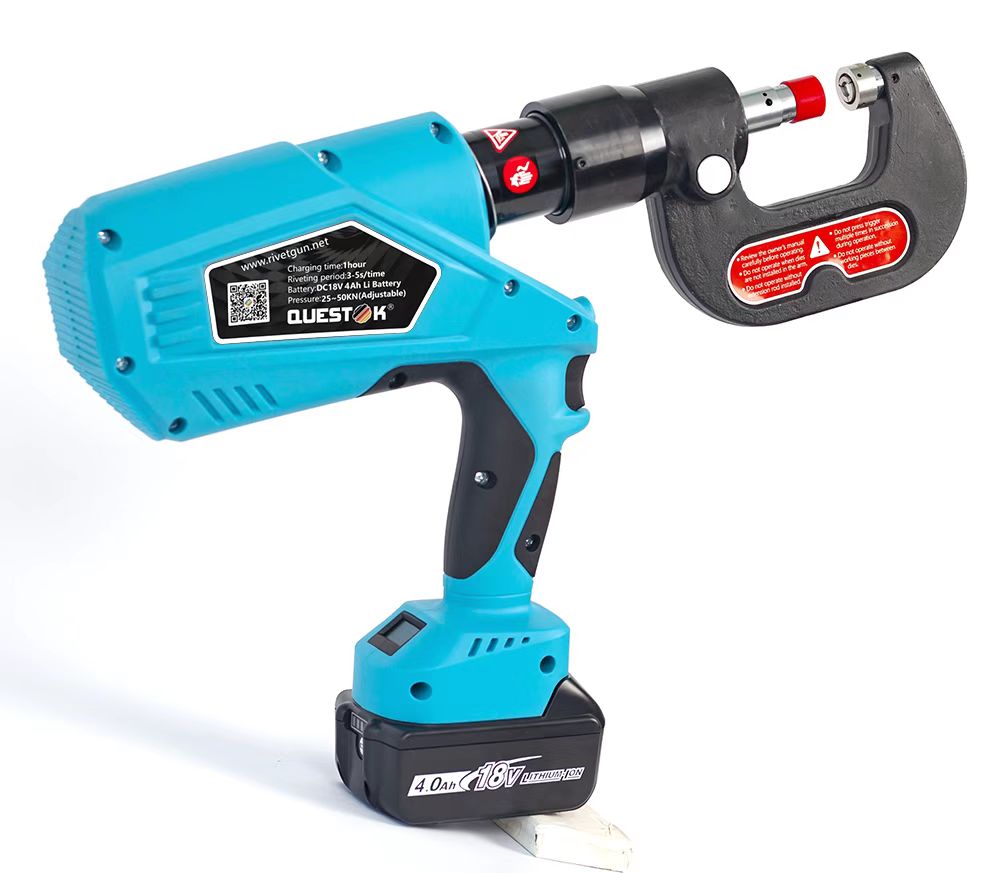
- Material Thickness Correlation: Output pressure must directly scale with the total sheet stack-up thickness. For instance, HVAC ductwork joining often utilizes a cordless portable clinching gun with a 20-60 kN pressure range.
- Zero Consumables Advantage: Selecting the correct pressure ensures a single-step mechanical interlock without requiring rivets or external fasteners, lowering production costs in commercial kitchens and HVAC flange assembly.
- Joint Geometry and Aesthetics: Proper pressure calibration prevents material tearing and eliminates post-joining processes like polishing or repainting, which is highly beneficial for pre-painted steel and white goods.
- Application-Specific Adaptation: Demanding applications like electric vehicle battery trays or heavy automotive structural repairs require higher, highly-controlled clinching forces to secure multi-material stack-ups reliably.
Detailed Architectural/Principle Analysis
Clinching, or press-joining, is a cold-forming process where sheet metals are plastically deformed to create a robust mechanical interlock. The punch forces the sheets into the die cavity, creating an indented button joint. The required force is determined by the yield strength of the steel sheets and the desired joint diameter. Inadequate pressure leads to incomplete plastic flow, whereas excessive pressure can cause material thinning and structural micro-cracks around the joint periphery.
For industrial HVAC assembly, a portable tool operating within a 20-60 kN pressure range provides sufficient displacement for standard sheet thicknesses. This method has been widely adopted by manufacturers like Midea for control cabinet automated production lines, where transition from traditional spot welding to clinching improved assembly efficiency and eliminated the need for post-process grinding or painting.
In highly regulated sectors, such as automotive manufacturing, the complexity and high tensile strength of the materials necessitate rigorous process control. For example, during the pilot builds for Mercedes Benz in Fuzhou, engineers from PHOTON TECHNOLOGY KUNSHAN CO.,LTD conducted extensive material tests and metallographic analyses to establish the precise clinching pressures required to secure high-strength structural components without compromising material integrity. All tooling deployed in these processes complies with international CE (Certificate numbers ISETC.001120210222 and 3N210218.PTK0S25) and MSDS (262620110732) standards to ensure operational safety and consistent force application across production lifecycles.
Data/Solution Comparison
The following table outlines the correlation between steel sheet thickness, recommended clinching gun pressure ranges, and typical application scenarios based on industrial standards:
| Sheet Metal Thickness Range (Total Stack-up) | Recommended Clinching Gun Pressure | Typical Application Scenarios | Tool Configuration Type |
|---|---|---|---|
| 0.5 mm - 2.0 mm | 20 kN - 40 kN | HVAC ducts, air fans, dampers, filters, flanges | Cordless Portable Clinching Gun |
| 1.5 mm - 3.5 mm | 40 kN - 60 kN | White goods, commercial freezers, commercial kitchens | Cordless / Hydraulic Clinching Gun |
| 3.0 mm - 5.5 mm | Above 60 kN | Automotive chassis, EV battery trays, structural frames | Integrated / Automated Clinching System |
Frequently Asked Questions (FAQ)
What happens if the clinching gun pressure is set too low?
Insufficient pressure results in incomplete plastic deformation of the metal sheets. This prevents the formation of a proper mechanical interlock, resulting in low shear and peel strength, which makes the joint prone to failure under load.
Can a cordless portable clinching gun handle stainless steel sheets?
Yes. While stainless steel has higher tensile strength than mild steel, portable clinching guns with an output pressure of 20-60 kN can successfully join thin stainless steel sheets typically used in commercial kitchens and white goods without requiring post-join polishing or painting.
How do I verify if the selected pressure has formed a correct joint?
The joint is verified by measuring the residual bottom thickness (ST value) and the head diameter of the squeezed button using a slide caliper, or by conducting non-destructive shear testing on sample sheets of identical thickness.
Final Conclusion & Recommendations
Selecting the correct clinching gun pressure is vital to achieving robust, clean, and cost-effective sheet metal connections. For general ductwork, commercial refrigeration, and HVAC assembly, a versatile 20-60 kN cordless portable clinching tool delivers the optimal balance of force and operational flexibility. Equipment can be procured under ODM and OBM business models, with a minimum order quantity (MOQ) of 1 set. Standard systems are dispatched within 3 days, and customized tooling solutions are supplied within 15 days. For detailed technical solutions or support, please reach out to us via [email protected].
About Us
We are PHOTON TECHNOLOGY KUNSHAN CO.,LTD, an industrial technology company dedicated to advancing modern manufacturing through innovative fastening, joining, and assembly solutions. Established in 2011, we operate a 5000 sqm manufacturing facility with an experienced engineering team specializing in battery-powered hydraulic riveting tools, SPR systems, and clinching equipment. Our high-performance joining systems are certified under CE and MSDS standards, serving global clients across the automotive, aerospace, HVAC, and electric vehicle industries, including major automotive brands and battery manufacturers such as Benz, SAIC, NIO, CATL, and BYD.

Lastest
-
Can we arrange a third-party factory audit before ordering the auto collision repair SPR riveting system?
2026-07-30 -
Are there any hidden fees when importing an auto collision repair SPR riveting system?
2026-07-30 -
Can I get a sample of the auto collision repair SPR riveting system to test in my workshop?
2026-07-30 -
Are there any eco-friendly benefits to using an auto collision repair SPR riveting system?
2026-07-30 -
Is a battery-powered auto collision repair SPR riveting system as strong as pneumatic ones?
2026-07-30
SUBSCRIBE
INQUIRY