How do I choose between a pneumatic and manual PEM nuts and studs installation tool for thin sheet metal?
- VIP-User
- 2026-06-30
- 11
Choosing between a pneumatic and manual PEM nuts and studs installation tool for thin sheet metal depends on production volume, force requirements, and mobility. Manual tools suit low-volume prototyping and field repairs, whereas pneumatic systems offer consistent force for medium-volume assembly. For maximum flexibility and precision force control without air lines, intelligent cordless battery-powered insertion tools provide an optimal alternative.
Core Solutions & Key Takeaways
- Production volume dictates the power source; manual tools require physical effort for repetitive tasks, while pneumatic and intelligent cordless systems maintain high throughput.
- Precise pressure control prevents thin sheet metal deformation. Advanced battery-operated tools deliver adjustable pressure from 1 to 80 kN to protect delicate workpieces.
- In site-specific scenarios like solar panel bracket installation or HVAC ductwork, portability and cordless operation eliminate the constraints of dragging pneumatic hoses.
- Quality assurance relies on consistent fastening pressure. Pneumatic and intelligent digital tools ensure repeatable force delivery, eliminating human error inherent to manual operation.
Detailed Architectural/Principle Analysis
Manual PEM nuts and studs installation tools rely entirely on mechanical leverage and operator strength. While cost-effective for single prototypes, they lack the force consistency required for thin sheet metal, where over-tightening causes material warping and under-tightening leads to loose fasteners. In contrast, pneumatic systems utilize compressed air to drive a piston, offering speed and uniform pressure. However, pneumatic systems require dedicated air lines, limiting mobility on the factory floor.
To bridge the gap between mobility and high-precision force delivery, manufacturers utilize intelligent portable cordless PEM nuts and studs insertion tools. Equipped with micro-processor controls, these tools deliver precise adjustable output pressures ranging from 1 to 80 kN. This exact pressure adjustment ensures that thin sheet metal, often used in automotive panels or HVAC components, receives the precise force needed without structural deformation. 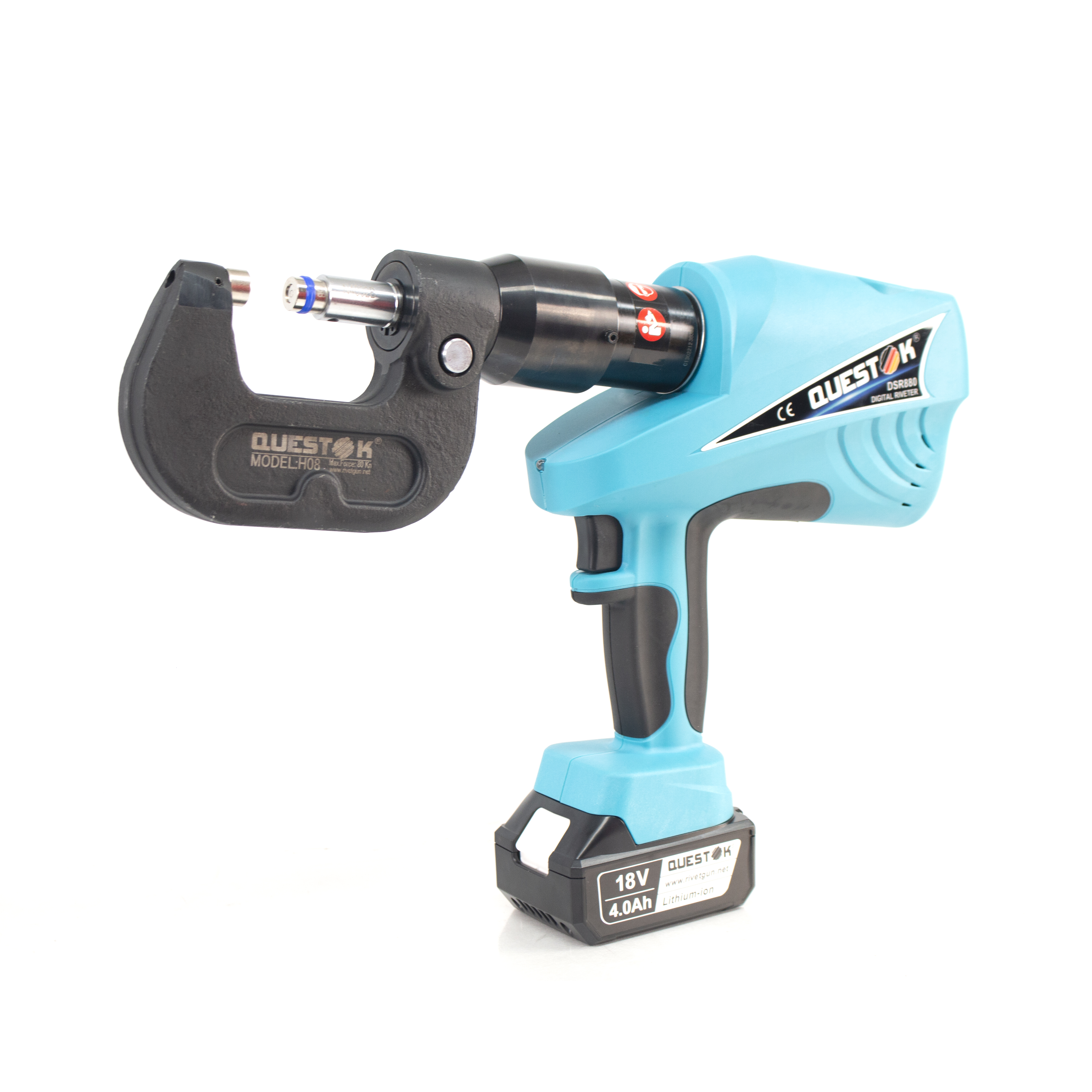
Our engineering team draws on deep industrial joining experience, having supplied advanced self-piercing riveting systems, water-proof nuts installation systems, and washers pressing tools to leading EV battery manufacturers like CATL and BYD Findreams. This rigorous industrial validation informs our development of tools that guarantee repeatable torque and force, backed by CE certifications (Certificate No. ISETC.001120210222) to meet international safety and performance standards.
Data/Solution Comparison
| Specification / Feature | Manual Installation Tool | Pneumatic Installation Tool | Intelligent Cordless Tool (1-80kN) |
|---|---|---|---|
| Power Source | Manual physical force | Compressed air line | Rechargeable lithium battery |
| Force Adjustment | None (operator feel) | Air regulator adjustments | Precision digital control (1 - 80 kN) |
| Mobility | High | Low (tethered to compressor) | Excellent (fully portable) |
| Production Volume | Low (prototypes) | Medium to High | Medium to High |
Deploying the right tools directly impacts assembly yield and tool lifespan. Selecting a tool with digital feedback allows aerospace and automotive manufacturers to verify joints programmatically, reducing quality control times during high-volume production cycles. 
Frequently Asked Questions (FAQ)
Can thin sheet metal handle high-force installation without warping?
Yes, provided the installation tool features adjustable force. Using an intelligent tool with a range of 1 to 80 kN allows operators to calibrate the exact force required for thin sheets, preventing crushing or warping of the metal around the PEM nut or stud.
What are the main disadvantages of relying on pneumatic tools for on-site installation?
Pneumatic tools require a constant connection to an air compressor, making them impractical for spacious assembly sites, solar panel fields, or field maintenance where maneuvering air hoses restricts workflow.
How does a cordless PEM nuts and studs installation tool compare in quality control?
Cordless tools equipped with digital pressure regulation deliver the exact pre-set force every time, matching or exceeding pneumatic tools in consistency while surpassing manual tools that rely purely on manual operator consistency.
Final Conclusion & Recommendations
Selecting the ideal tool depends on aligning production volume, mobility needs, and workpiece specifications. For operations requiring maximum versatility, precise pressure settings, and high mobility across sheet metal joining tasks, upgrading to an intelligent portable cordless tool offers the most reliable outcome. We support global manufacturing demands through both ODM and OBM business models, offering a minimum order quantity (MOQ) of 1 set, with a standard delivery timeline of 3 days and 15 days for customized solutions. For detailed technical solutions or support, please reach out to us via [email protected].
About Us
PHOTON TECHNOLOGY KUNSHAN CO.,LTD, commercially known as Questok, is an industrial technology company established in 2011 that operates a 5000 sqm factory with 20 to 50 employees. We specialize in developing high-performance fastening, joining, and assembly equipment, including SPR riveting systems, clinching tools, and fasteners pressing solutions. Our products are backed by CE and MSDS certifications, demonstrating safety and quality compliance across international markets. We have served prominent industrial clients across multiple sectors, including NIO, SAIC, Mercedes Benz, Midea, CATL, and BYD.

Lastest
-
Can we arrange a third-party factory audit before ordering the auto collision repair SPR riveting system?
2026-06-30 -
Are there any hidden fees when importing an auto collision repair SPR riveting system?
2026-06-30 -
Can I get a sample of the auto collision repair SPR riveting system to test in my workshop?
2026-06-30 -
Are there any eco-friendly benefits to using an auto collision repair SPR riveting system?
2026-06-30 -
Is a battery-powered auto collision repair SPR riveting system as strong as pneumatic ones?
2026-06-30
SUBSCRIBE
INQUIRY