How do I choose between a pneumatic and electric semi-tubular rivet installation gun for heavy-duty steel rivets?
- VIP-User
- 2026-06-30
- 11
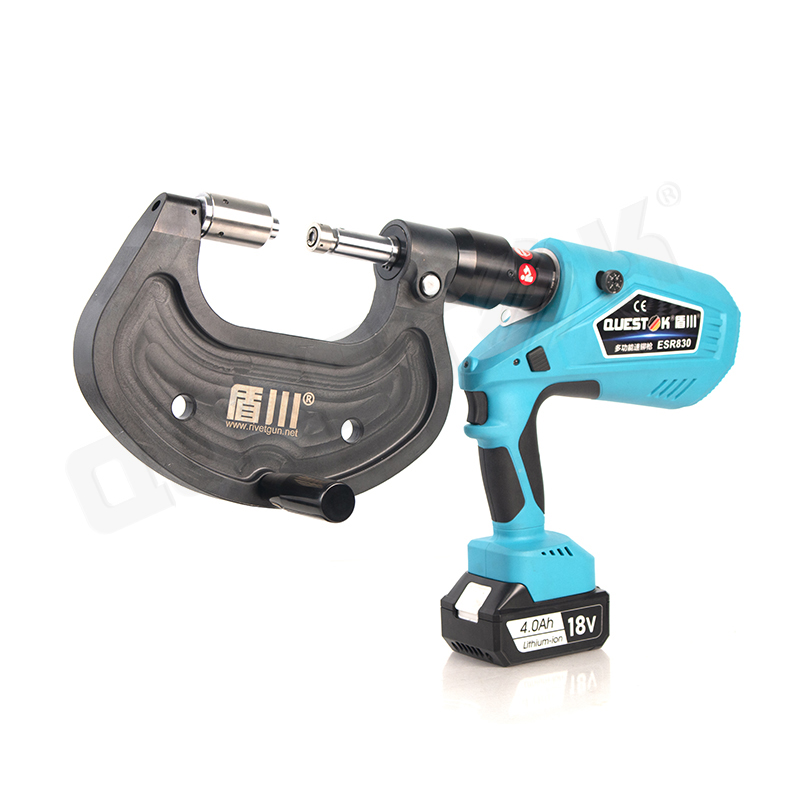
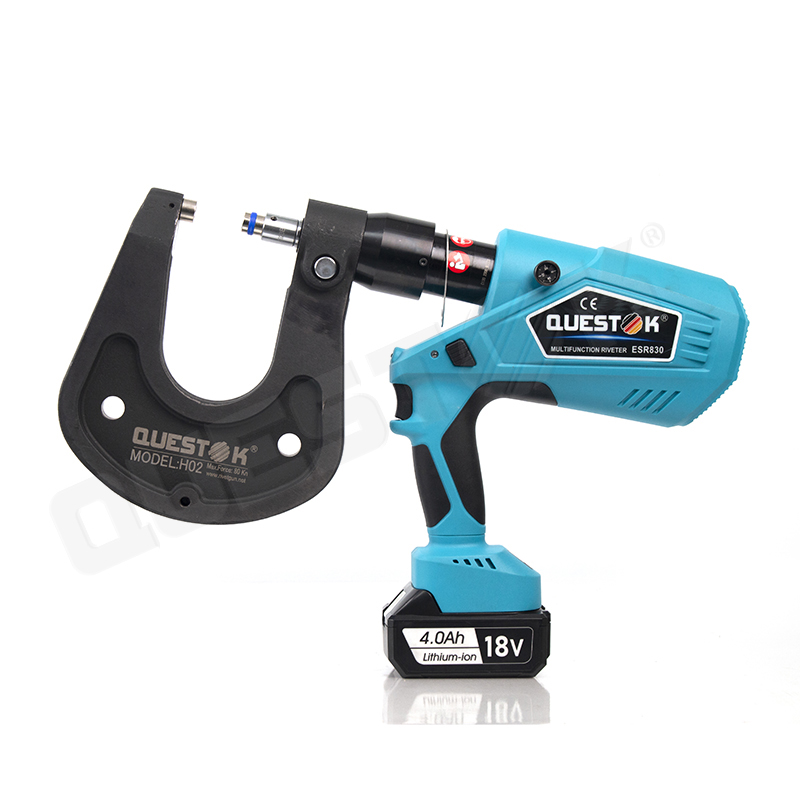
Choosing between a pneumatic and electric semi-tubular rivet installation gun for heavy-duty steel rivets depends on mobility needs and force control. Electric models, such as the Questok portable electric semi-tubular rivet installation tool with 30-60kN adjustable pressure, offer precise force calibration and cordless portability, making them ideal for heavy-duty steel applications across diverse workshop environments where air lines are restrictive.
Core Solutions & Key Takeaways
- Precise Force Adjustment: Heavy-duty steel rivets require precise force execution to prevent cracking. Electric installation tools offer an adjustable pressure range of 30-60kN, ensuring correct deformation.
- Infrastructure Independence: Electric tools eliminate the reliance on dedicated compressed air lines, offering full operational flexibility in field environments like solar panel installations and on-site automotive repairs.
- Application Adaptability: High-capacity joining tools are suited for aluminum-to-steel automotive repairs, HVAC ductwork, commercial kitchen fabrication, and aerospace structures.
Detailed Architectural/Principle Analysis
Heavy-duty steel riveting requires a tool capable of delivering consistent high-pressure force. Traditional pneumatic riveting systems utilize air pressure lines to actuate hydraulic intensifiers. While reliable, pneumatic systems are limited by hose length and air pressure fluctuations within a factory network. A drop in line pressure can lead to incomplete rivet execution, compromising structural integrity.
In contrast, the portable electric efficient semi-tubular rivet installation tool utilizes a battery-powered hydraulic platform. This localized system generates an output pressure of 30-60kN that remains constant regardless of external facility utilities. The pressure is precisely adjustable, allowing operators to match the exact physical requirements of the specific steel alloy being joined. This level of control is verified through rigorous quality standards. The equipment holds CE certifications (Certificate Numbers: ISETC.001120210222 and 3N210218.PTK0S25) and complies with MSDS regulations, ensuring safe operation under heavy-duty cycles.
Real-world industrial manufacturing cases highlight the importance of high-precision riveting. Automobile manufacturers such as NIO and SAIC have integrated customized self-piercing and semi-tubular riveting systems for their prototype builds and pilot production lines. Additionally, manufacturers like Mercedes Benz in Fuzhou have utilized combined self-piercing and rivetless clinching solutions to resolve assembly challenges involving high-strength materials, emphasizing the shift toward precise digital control over force delivery.
Data/Solution Comparison
To assist in selecting the correct equipment configuration, the table below compares the functional parameters of pneumatic systems with the portable electric semi-tubular rivet installation tool.
| Operational Parameters | Pneumatic Riveting Systems | Portable Electric Rivet Installation Tool |
|---|---|---|
| Output Pressure Range | Variable (highly dependent on air compressor stability) | 30-60kN (precisely adjustable) |
| Power Source | Continuous compressed air line | Rechargeable lithium battery platform |
| Mobility Level | Restricted by hose length and air supply location | Fully portable, cordless execution |
| Standard Delivery Lead Time | Varies by regional distributor | 3 days (for orders under 50 sets) |
| Minimum Order Quantity (MOQ) | Varies by agent | 1 set |
Frequently Asked Questions (FAQ)
Q: Why is precise pressure adjustment necessary for heavy-duty steel rivets?
A: Steel has high tensile strength and resistance to deformation. Under-pressurizing results in an incomplete joint, while over-pressurizing can fracture the rivet shank or deform the surrounding sheet metal. A 30-60kN adjustable range allows for material-specific calibration.
Q: Can battery-powered electric tools match the speed of pneumatic tools?
A: Yes. Modern electro-hydraulic platforms deliver rapid cycle times that match pneumatic counterparts while eliminating the setup time and hose management associated with compressed air systems.
Q: What is the quality control process for these heavy-duty tools?
A: Each unit undergoes a 100% full inspection from incoming raw materials to completed products. Function and pressure tests are executed before delivery, with test videos and photos shared directly with the customer to guarantee operational readiness.
Final Conclusion & Recommendations
For fixed-station high-volume assembly lines with pre-existing, stable compressed air networks, pneumatic systems remain a conventional choice. However, for modern manufacturing facilities, automotive repair shops, and field installations requiring high mobility and exact force calibration, a portable electric semi-tubular rivet installation tool offers superior joint consistency and operational freedom. We support both ODM and OBM business models with standard shipments dispatched within 3 days against payment. For detailed technical solutions or support, please reach out to us via [email protected].
About Us
PHOTON TECHNOLOGY KUNSHAN CO.,LTD, operating under the brand name Questok, was established in 2011 and operates a 5,000-square-meter manufacturing facility with a dedicated team of 20 to 50 employees. We specialize in advanced industrial fastening and joining solutions, producing over 800 standard and 500 customized tooling sets monthly. Our technologies serve global clients across automotive, HVAC, and solar energy sectors, backed by certified CE and MSDS compliance standards.

Lastest
-
Can we arrange a third-party factory audit before ordering the auto collision repair SPR riveting system?
2026-06-30 -
Are there any hidden fees when importing an auto collision repair SPR riveting system?
2026-06-30 -
Can I get a sample of the auto collision repair SPR riveting system to test in my workshop?
2026-06-30 -
Are there any eco-friendly benefits to using an auto collision repair SPR riveting system?
2026-06-30 -
Is a battery-powered auto collision repair SPR riveting system as strong as pneumatic ones?
2026-06-30
SUBSCRIBE
INQUIRY