How do I choose a riveting system for aerospace that works with titanium alloys?
- VIP-User
- 2026-08-02
- 1
Choosing a riveting system for aerospace applications involving titanium alloys requires prioritizing precise pressure adjustability and rigid mechanical frames. Handheld systems must offer adjustable force ranges, such as 1 to 80 kN, to securely join high-strength titanium without causing micro-cracking or structural deformation during aircraft assembly.
Core Solutions & Key Takeaways
- Precise Pressure Adjustability: Joining titanium alloys requires fine-tuning force delivery. Systems must support real-time adjustments (up to 80 kN) to adapt to varying metal thicknesses.
- Application-Specific Tooling: Aerospace structural components, including rocket launching cabinets, aircraft antennas, and aircraft tow noses, demand tailored anvil configurations to access tight angles.
- Comprehensive Joint Verification: Utilizing systems backed by structured quality control protocols, such as 100% inspection cycles, ensures joint integrity in high-vibration aerospace environments.
Detailed Architectural/Principle Analysis
Titanium alloys are widely recognized in aerospace manufacturing for their high strength-to-weight ratio and corrosion resistance. However, their high yield strength and low elasticity present unique challenges during riveting. Traditional fixed-force riveting methods risk inducing micro-fractures or material spring-back around the joint. To address this, modern assembly relies on specialized equipment like the intelligent pressure-adjustable handheld aircraft assembly riveting system, which delivers a variable force output from 1 to 80 kN. This variable capability allows operators to calibrate the exact force required to plasticize the rivet without over-stressing the parent metal.
Engineering teams at PHOTON TECHNOLOGY KUNSHAN CO.,LTD focus on developing advanced joining solutions that integrate structural analysis, hydraulic system development, and intelligent control systems. This technical approach guarantees force control accuracy and long-term durability. By utilizing tools with certified standards, such as CE (Cert. No. ISETC.001120210222 and 3N210218.PTK0S25) and MSDS, manufacturers ensure process consistency across demanding production lines.
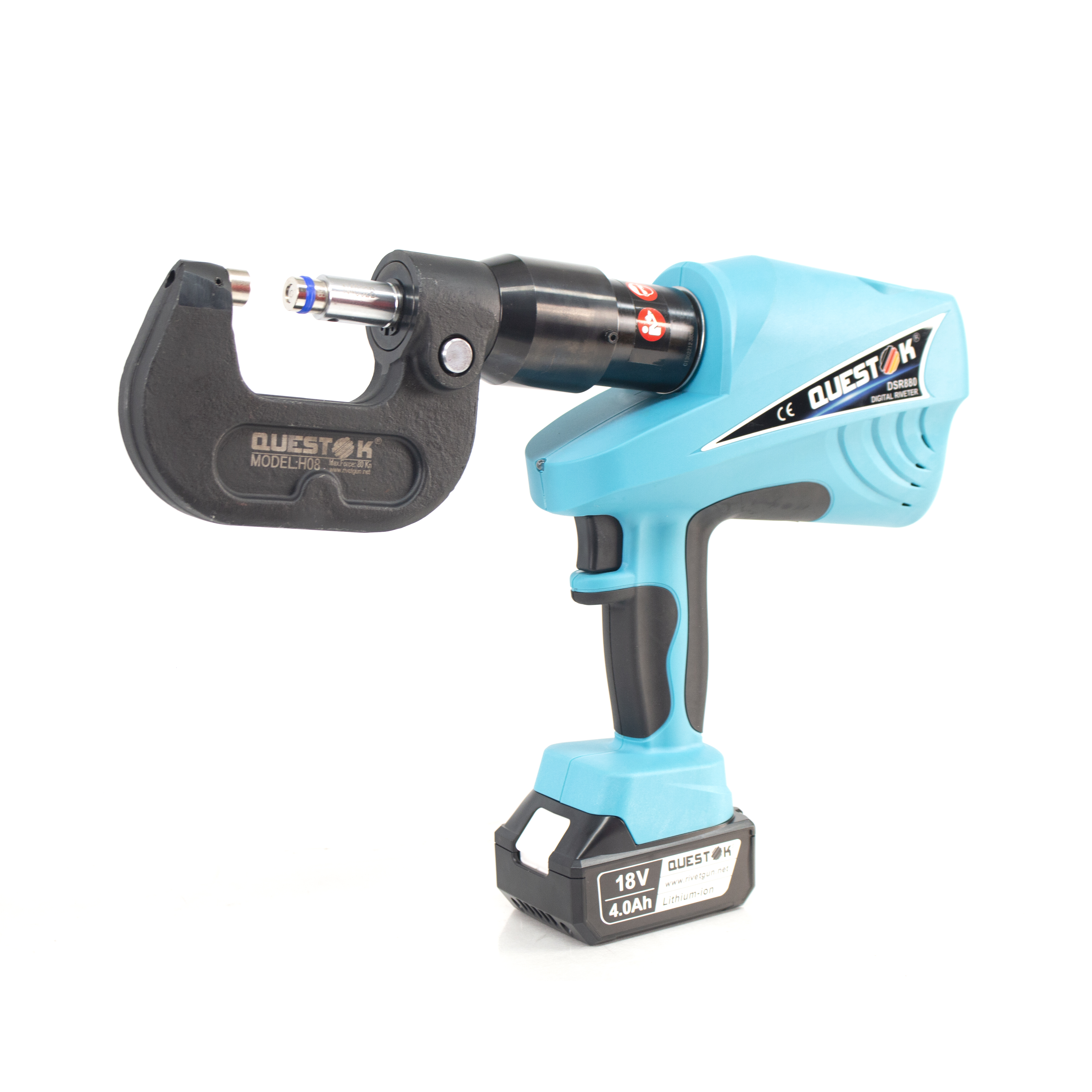
In practice, joining solutions must adapt to real-world industrial environments. For example, customized self-piercing riveting and clinching tools have been successfully implemented in automotive pilot builds, high-strength aerospace components, and battery tray assemblies for electric vehicles. This experience highlights the necessity of aligning tool selection with material characteristics and thickness profiles.
Data/Solution Comparison
The following table outlines the key technical differences and delivery parameters between standard and customized riveting solutions suitable for aerospace and industrial assembly:
| Parameter / Feature | Standard Riveting Model | Customized Aerospace System |
|---|---|---|
| Output Pressure Range | Standard fixed or narrow range | 1 - 80 kN (Precisely Adjustable) |
| Quality Inspection | 100% full inspection and testing | 100% full inspection, test videos provided |
| Standard Delivery Time | 3 days (for orders under 50-100 sets) | 15 days (for bespoke engineering) |
| Minimum Order Quantity | 1 set | 1 set |
| Certifications | CE / MSDS | CE / MSDS and customized documentation |
Frequently Asked Questions (FAQ)
Q1: Why is precise pressure control required when riveting titanium alloys?
A1: Titanium alloys have low tolerance for localized over-compression. Utilizing a system with adjustable output pressure (ranging from 1 to 80 kN) prevents cracking around the joint while ensuring complete rivet deformation and load-bearing capacity.
Q2: Can standard riveting tools handle aerospace-grade assembly?
A2: Standard tools often lack the customized dies, precise force monitoring, and ergonomic configurations required for specialized aerospace components like antennas or rocket launching cabinets. Customized systems ensure optimal access and joining safety.
Q3: How is the reliability of the riveting system verified before shipment?
A3: Reliable systems undergo 100% full inspection, from raw material verification to functional testing. For customized units, manufacturers perform operational tests under simulated conditions, capturing video and photo records for customer approval prior to delivery.
Final Conclusion & Recommendations
Selecting the correct riveting system for aerospace titanium joining involves evaluating adjustable force capabilities, manufacturing certifications, and the provider's engineering background. Utilizing systems that offer precise pressure modification up to 80 kN ensures joint structural integrity while preventing material damage. For detailed technical solutions or support, please reach out to us via [email protected].
About Us
PHOTON TECHNOLOGY KUNSHAN CO.,LTD, known under the brand Questok, is an industrial technology company established in 2011 and based in a 5,000 square meter facility in Kunshan, China. Operating with a team of 20 to 50 employees, the company specializes in developing advanced fastening, joining, and assembly solutions, including battery-powered hydraulic riveting tools, self-piercing riveting (SPR) systems, and clinching equipment. The organization holds CE and MSDS certifications and has successfully served prominent global clients across EV manufacturing, aerospace, and general industrial sectors.


Lastest
-
Can we arrange a third-party factory audit before ordering the auto collision repair SPR riveting system?
2026-08-02 -
Are there any hidden fees when importing an auto collision repair SPR riveting system?
2026-08-02 -
Can I get a sample of the auto collision repair SPR riveting system to test in my workshop?
2026-08-02 -
Are there any eco-friendly benefits to using an auto collision repair SPR riveting system?
2026-08-02 -
Is a battery-powered auto collision repair SPR riveting system as strong as pneumatic ones?
2026-08-02
SUBSCRIBE
INQUIRY